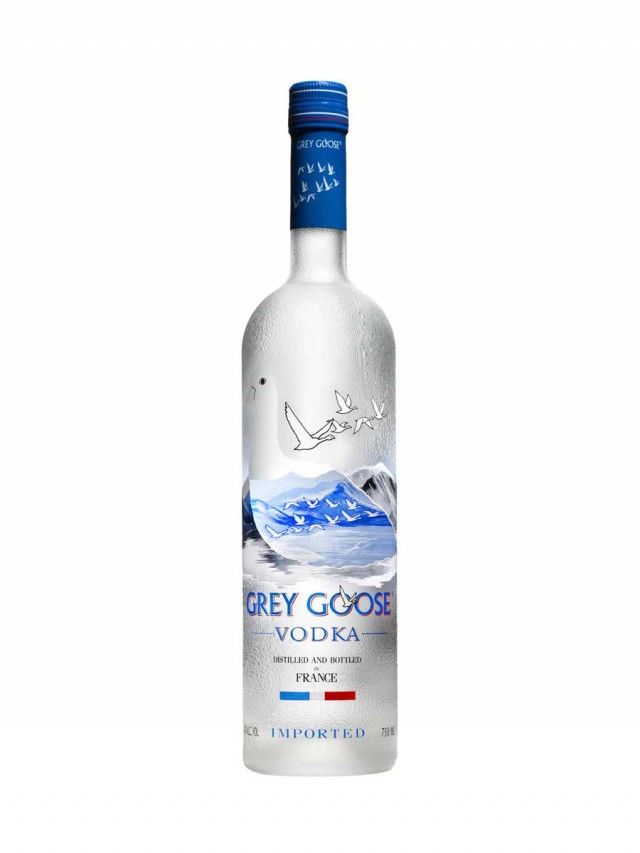

Heritage & Distillery
Grey Goose occupies a singular position in the modern history of premium spirits — a vodka conceived not from centuries of ancestral distilling tradition but from a deliberate, calculated act of brand architecture that nonetheless produced something of genuine and lasting quality. Created in 1997 by American entrepreneur Sidney Frank in partnership with the cognac house of Maître Chai François Thibault, Grey Goose was designed from its inception to occupy the uppermost echelon of the global vodka market — a category that, at the time of its launch, had scarcely conceived of itself as a luxury proposition. The decision to locate production in France, a country whose cultural authority in matters of gastronomy and fine drink is beyond serious dispute, was an act of shrewd geographical branding that also happened to deliver genuine provenance. Picardy, the northern agricultural region that supplies the vodka's single-origin winter wheat, has cultivated grain since the medieval period — its soils, climate, and farming heritage contributing a distinct terroir character that elevates Grey Goose beyond a merely competent neutral spirit.
The Bacardi Corporation acquired Grey Goose in 2004 for a then-record $2.2 billion, a transaction that testified to the brand's extraordinary commercial success and underscored the degree to which premium vodka had transformed itself into one of the spirits industry's most lucrative categories. Under Bacardi's stewardship, the production philosophy established by Thibault has remained intact — a commitment to single-origin French wheat, soft Gensac spring water drawn from a limestone aquifer in the Cognac region, and a single continuous distillation process conducted at the Gensac-la-Pallue distillery.
Production
The production of Grey Goose is distinguished by a studied restraint — a refusal to distil excessively, filter aggressively, or otherwise strip the spirit of its character in the pursuit of absolute neutrality. The wheat is milled and fermented in Picardy before being transported south to the Cognac region for distillation, a journey that mirrors the movement of raw agricultural ingredient toward its spiritual refinement. Distillation is conducted in a five-column continuous still — a process that achieves a high degree of purity without the repetitive redistillation that some producers deploy to the point of self-defeat. The resulting spirit is then blended with Gensac spring water, filtered through limestone, and bottled without chill-filtration, a decision that preserves the subtle fatty acid esters responsible for the vodka's characteristic silkiness.
It is worth remarking that the insistence on single-origin wheat — a grain whose variety, growing conditions, and harvest date all influence the character of the finished spirit — represents a more philosophically serious approach to vodka-making than the casual consumer might suppose. Thibault's background in cognac production, where raw material provenance is treated as a matter of near-religious importance, manifestly informs the approach taken at Grey Goose, and the result is a spirit that rewards careful attention in a way that many of its competitors do not.
Tasting Notes
On the nose, Grey Goose presents with admirable composure — clean and subtle, as befits a premium wheat vodka of French provenance, with soft citrus notes that suggest lemon zest rather than fruit flesh, a delicate undercurrent of white pepper, and a background suggestion of almond sweetness that lends the aromatics a faintly confectionery quality without surrendering the spirit's essential dryness. There is no harshness, no solvent quality, no deficiency of the kind that betrays a poorly made neutral spirit — only a composed, elegant nose that invites rather than demands.
The palate confirms what the nose promises — a silky smooth mouthfeel of considerable distinction, with gentle wheat sweetness at the fore, clean light citrus in the mid-palate, and a subtle inflection of star anise that adds the faintest anise-adjacent complexity to an otherwise pristine profile. The balance is exemplary: no single element overwhelms another, and the spirit sits on the palate with a serene self-assurance that speaks to the quality of its raw materials and the skill of its production. The finish is medium in length, clean, smooth, and warmed by the gentlest peppery note that fades with commendable elegance.
The Serve
Grey Goose is perhaps most faithfully expressed when served neat and chilled — ideally from a bottle stored in the freezer for several hours, served in a small crystal glass that concentrates the aromatics. The vodka's pronounced silkiness is most apparent in this context, and the wheat character is at its most legible without the intervention of other ingredients. For those inclined toward cocktails, Grey Goose performs exceptionally well in a Vodka Martini — served with a single large ice cube or stirred with cracked ice and strained into a chilled coupe — where its citrus notes and smooth body create a cocktail of genuine refinement. A Greyhound (vodka and fresh grapefruit juice) is another serve that flatters the spirit's character, the bitterness of quality grapefruit drawing out the wheat sweetness and peppery warmth in pleasing counterpoint.
Verdict
Grey Goose is a premium vodka that has earned its reputation honestly — whatever one may think of the marketing mythology that surrounds it, the liquid in the bottle is a genuinely accomplished expression of French wheat vodka, produced with care, intelligence, and a respect for raw material provenance that distinguishes it from many of its rivals. At a rating of eight out of ten, it represents a benchmark for the Plain category: supremely smooth, elegantly balanced, and possessed of a subtle complexity that rewards those who take the trouble to pay attention. It is not the most characterful vodka in this publication's portfolio — Belvedere and Chopin both offer greater depth — but as an expression of refined, accessible luxury, it remains close to definitive.